Chasing a Ghost: The 'Due Jackpot' Myth That's Quietly Emptying Your Wallet
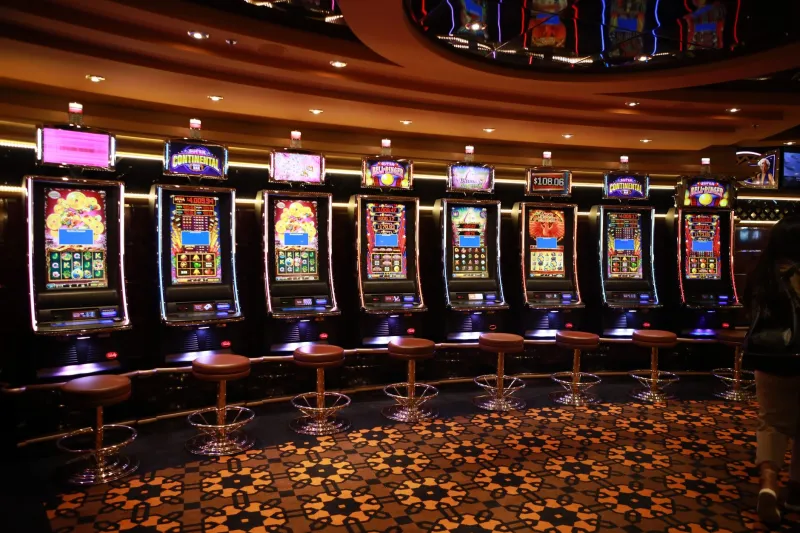
You've been sitting at the same machine for 45 minutes. It hasn't paid anything meaningful. Your gut is telling you the big one is right around the corner — the machine has to hit soon, right? You've put in the time. You've done the work.
Wrong. And that feeling? It's costing American slot players billions of dollars every year.
Let's get into why the 'due jackpot' is one of the most persistent — and most damaging — myths in all of gambling.
What Your Brain Thinks vs. What the Math Says
Humans are pattern-recognition machines. It's literally how we evolved. When our ancestors saw rustling grass, they assumed predator, not wind. That instinct kept us alive for thousands of years. In a casino, it'll drain your bank account.
The belief that a slot machine is overdue for a payout is called the Gambler's Fallacy — the mistaken idea that past independent events influence future ones. Flip a coin ten times and get heads every time, and your brain screams that tails is due. But the coin doesn't have memory. The eleventh flip is still 50/50.
Slot machines work exactly the same way, only the math is far more complex and the stakes are much higher.
RNGs Don't Keep Score
Every modern slot machine — whether you're playing at a Vegas Strip casino, a tribal gaming hall in Oklahoma, or an online casino licensed in New Jersey — runs on a Random Number Generator (RNG). This is a sophisticated algorithm that produces thousands of number combinations per second, even when nobody is playing.
When you hit the spin button, the RNG locks onto the combination it's generating at that exact millisecond. That's your result. The machine has no awareness of:
- How long since the last jackpot
- How much money you've deposited
- How many spins have gone by without a significant win
- Whether it's Tuesday or Saturday night
Every single spin is a completely independent event. The machine is not building toward anything. There is no pressure valve that eventually has to release. A slot that just paid out a $10,000 jackpot has the exact same probability of hitting another $10,000 jackpot on the very next spin as it did before the first one hit.
That's not poetic. That's just arithmetic.
How Casinos Quietly Encourage This Thinking
Here's where it gets a little uncomfortable: the gaming industry — both physical casinos and online platforms — doesn't exactly rush to correct this misconception. And some practices seem almost engineered to reinforce it.
Near misses. Slot machines are legally allowed (and commonly programmed) to display near-miss outcomes more frequently than pure randomness would produce. When two jackpot symbols land on the payline and the third stops just above or below, your brain interprets this as 'almost.' It wasn't almost anything — it was a loss, same as any other — but the visual creates a sense of mounting inevitability.
Jackpot meters. Those big, flashing progressive jackpot displays climbing toward $500,000 or $2 million? They're exciting, and they're meant to be. But a jackpot being large doesn't mean it's close to hitting. A progressive that resets at $1 million after paying out is no more likely to hit at $1.8 million than it was at $1.1 million. The meter measures accumulated money, not probability.
'Hot' and 'cold' machine mythology. Walk through any casino floor and you'll overhear players talking about machines that are 'running hot' or 'gone cold.' Casino staff rarely correct this. Some floor layouts even cluster recently-paying machines near entrances and high-traffic areas — not because they're programmed to pay more, but because the sight of someone winning draws a crowd.
Loyalty program messaging. Ever notice how casino apps and player's club emails will tell you that your 'luck is about to turn' or that you're 'due for a big session'? That language is intentional. It's designed to get you back in the door, and it exploits exactly the cognitive bias we're talking about.
Recognizing the Trap Before It Closes
The due-jackpot myth is especially dangerous because it feels rational in the moment. Here's a quick framework to check yourself:
Ask: Am I staying because I have a reason, or because I've already lost? If the primary reason you're still playing is the money you've already put in, that's the sunk cost fallacy talking — a close cousin of the Gambler's Fallacy. The money already spent is gone regardless of what you do next.
Set a hard stop before you start. Decide on your session budget and time limit before you sit down. Write it in your phone notes if you have to. A predetermined limit is much harder to rationalize away than one you're setting mid-session while you're down $200.
Treat every session as its own event. Yesterday's losses don't make today's wins more likely. This session doesn't owe you anything from your last three sessions. Each time you sit down is a fresh, independent experience with its own independent probabilities.
Watch for emotional language in your own thinking. Words like 'due,' 'owe,' 'about to,' or 'can't keep going cold forever' are red flags. The machine doesn't owe you. It can, mathematically, keep going cold forever.
The Smarter Way to Think About Slots
None of this means slots aren't fun or aren't worth playing. They absolutely can be — when you go in with realistic expectations and a clear head.
Understanding that every spin is independent actually takes pressure off. You're not in a battle of attrition with the machine. You're not being tested. You're playing a game of chance, and the only variable you truly control is how much you're willing to risk for a given amount of entertainment.
That's a much healthier — and much cheaper — way to play.
The house edge is baked in. The RNG doesn't negotiate. But the moment you stop chasing a payout that the math says was never 'coming,' you've already made the smartest move at the casino.