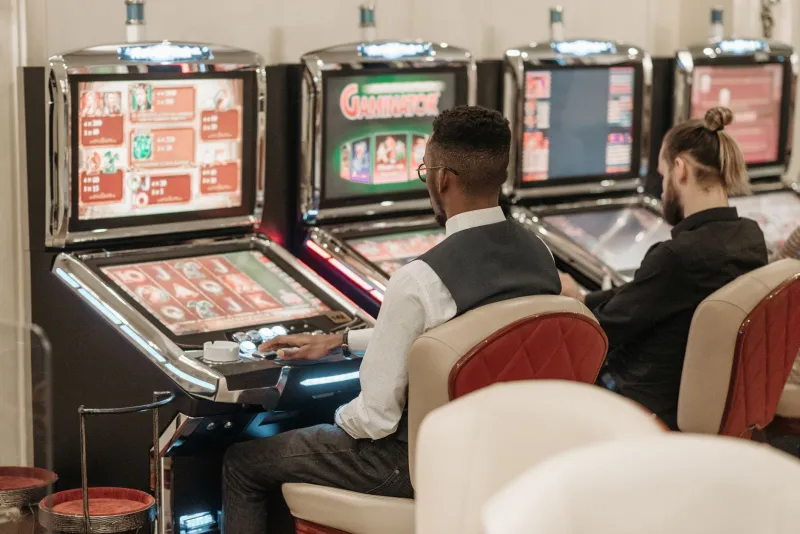
What Your Slot Sessions Are Really Costing You: The Full Picture Most Players Never See
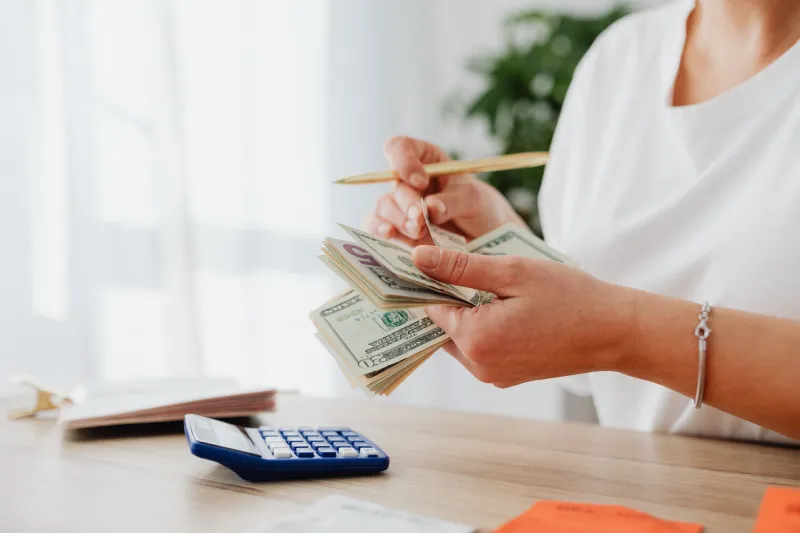
Ask most slot players what their sessions cost them, and they'll give you a number tied directly to what they lost. "I was down $80." "I broke even." "I walked away up $45."
That's an understandable way to think about it. But it's also incomplete in ways that quietly add up to something much larger over the course of a year. The real cost of a slot session isn't just the money that doesn't come home with you. It includes time, compounding habits, and the sneaky math behind that one phrase almost every player has said at least once: just one more spin.
Let's do the actual math — because the numbers tell a story that's hard to ignore.
First, Let's Talk About What "Just One More Spin" Actually Costs
It sounds harmless. One more spin. Thirty seconds, maybe a dollar or two. Except it's almost never just one more spin, is it?
Here's a simple scenario. You're playing a $1.50-per-spin slot. You've hit your planned session limit but the bonus round feels close. You decide to do "just a few more" spins. Conservatively, let's say that extends your session by 15 minutes and another 30 spins.
At $1.50 per spin, that's $45 in additional wagers. On a game with a 94% RTP (which is fairly typical), your expected return on that extra $45 is about $42.30 — meaning your expected additional loss is roughly $2.70 in theoretical terms.
That sounds fine, right? Except expected value isn't the whole story. That 15-minute extension:
- Has a real chance of triggering another "just a few more" cycle
- Is happening at a moment when your discipline is already compromised
- Represents a habit pattern, not a one-time event
Now multiply that behavior across a year.
The Annual Cost Calculator: Running the Real Numbers
Let's build out a realistic annual cost estimate for a casual US slot player. We'll use conservative, realistic assumptions.
Baseline player profile:
- Plays 2 sessions per week (land-based or online)
- Average session length: 90 minutes
- Bet size: $1.50 per spin
- Spins per minute: approximately 8 (typical for modern video slots)
- RTP: 94%
Session math:
- Spins per session: 8 × 90 = 720 spins
- Total wagered per session: 720 × $1.50 = $1,080
- Expected loss per session (6% house edge): $64.80
- Sessions per year: 104
- Annual expected loss from wagering alone: $6,739
That's the number most players never calculate. Not $80 here and $40 there — nearly seven thousand dollars a year in expected theoretical losses from a seemingly casual twice-a-week habit.
But we're not done.
The Time Cost: What Else Could You Be Doing?
Time has value. Economists call it opportunity cost — what you give up by spending your time one way instead of another. For slot players, this one often gets completely ignored.
Using our baseline player:
- 90 minutes per session × 104 sessions = 156 hours per year spent playing slots
That's nearly four full work weeks. What's your time worth? If you value it conservatively at $25/hour (well below average US hourly earnings), that's $3,900 in opportunity cost annually — time that could have gone toward a side project, skill development, family time, or literally anything else.
Combined with the wagering loss: $6,739 + $3,900 = $10,639 total annual cost for what most people would describe as a casual hobby.
The "Just One More" Multiplier: How Small Extensions Compound
Now let's layer in the habit we mentioned earlier. What if that "just one more spin" extension happens in half of all sessions?
Assume each extension adds 15 minutes and 30 additional spins at $1.50:
- Additional wager per extension: $45
- Expected loss per extension (6% house edge): $2.70
- Extensions per year (52 sessions): 52 × $2.70 = $140.40 in additional expected losses
Okay, $140 doesn't sound catastrophic on its own. But here's the problem: the extension habit rarely stays at 30 spins. Once the discipline ceiling breaks, sessions that were planned for 90 minutes regularly stretch to 2 hours. Let's model that:
- Extended session length: 120 minutes instead of 90
- Additional spins: 240 per extended session
- Additional wager: $360
- Additional expected loss: $21.60 per extended session
- 52 extended sessions per year: $1,123 in additional annual losses
Add that to the baseline: $6,739 + $1,123 = $7,862 in wagering losses alone — just from letting sessions run long half the time.
What This Looks Like Over 5 Years
None of this is meant to make slot playing sound like a financial catastrophe. Entertainment costs money. That's fine and normal. But here's a 5-year projection worth sitting with:
| Cost Category | Annual | 5-Year Total |
|---|---|---|
| Expected wagering losses (baseline) | $6,739 | $33,695 |
| Session extension losses | $1,123 | $5,615 |
| Opportunity cost (time) | $3,900 | $19,500 |
| Total | $11,762 | $58,810 |
Again — this is a casual player. Twice a week. $1.50 spins. The numbers scale dramatically with bet size, frequency, and the length of session extensions.
How to Use This Information Without Ruining Your Fun
None of this math is meant to be a buzzkill. Slots are entertainment, and entertainment has a cost — that's completely legitimate. The goal here isn't to make you feel guilty for playing. It's to make sure you're walking in with your eyes open.
A few practical takeaways:
Set a hard time limit and treat it like a financial limit. Most players set a loss limit but ignore the clock. Time is money in a very literal sense at a slot machine.
Budget your slot spending like any other entertainment expense. What would you pay annually for a gym membership? A streaming service? Concert tickets? Slot play deserves the same intentional budget treatment.
The "one more spin" trap is a budget line item, not a free decision. Every time you extend a session, you're making a financial choice. Naming it as such makes it easier to decline.
Track your actual sessions for one month. Not what you think you spend — what you actually spend. Most players are genuinely surprised by the gap between perception and reality.
The Smartest Spin You Can Make
Spinning smarter doesn't mean spinning less — it means spinning with full awareness of what you're actually investing. The players who get the most genuine enjoyment out of slots are usually the ones who treat their gaming budget as a deliberate entertainment expense rather than an open tab.
Run your own numbers. Know your real cost. Then play with confidence — because there's a big difference between choosing to spend $X on something you enjoy and accidentally spending it without realizing how it added up.